
Introduction to Breeding Dubia Roaches for Bearded Dragons
Dubia roaches are a tasty protein source for bearded dragons and have numerous health benefits that can’t be ignored. They are an all-time favorite amongst reptile enthusiasts who want a highly nutritious, quiet, and low-maintenance feeder.
Benefits aside, constantly having to buy dubia roaches when they are running low can take a toll on your wallet. They are one of the most expensive feeder insects available, which can make it challenging to offer them as a staple protein source. However, there’s a much cheaper alternative, and that is to breed them yourself. Breeding dubia roaches ensures a fresh and constant supply of feeders, and this article will tell you everything you need to know about establishing a thriving breeding colony.
Why Dubia Roaches for Bearded Dragons?
Dubia roaches might be a nuisance to us, but they are incredibly nutritious for our bearded dragons. They are a rich source of protein, calcium, and essential vitamins. A single adult dubia roach has between 19-22% Protein, which is perfect for both young and adult bearded dragons. Some sources even suggest that large dubia roaches can have up to 36% protein and about 54% on a dry matter basis.
But why is protein important for bearded dragons? Protein is crucial for growth and energy and contains essential amino acids that support important bodily functions, such as digestion and muscle development.
Unlike many other feeders, dubia roaches have a low fat content. This makes them an excellent staple protein source that can be fed regularly to your bearded dragon without having to worry about excessive weight gain. Furthermore, dubia roaches are one of the easiest feeders to breed and maintain. They aren’t noisy or smelly, and any minor smells are usually from their food or substrate. You also don’t have to worry about them jumping out of the breeding container when you lift the lid, which is a perk for those of you who are used to feeder crickets.
Another good reason to breed dubia roaches for your bearded dragon is that it is more affordable long-term than continuously buying them from a store. You don’t need to be an expert or have any fancy supplies to maintain a healthy breeding colony. Dubia roaches have a 1-2 year life cycle, so generations of these nutritious feeders can sustain your beardie for many years to come.
Setting Up Your Dubia Roach Colony
Setting up your dubia roach colony is fairly straightforward, and here’s how you can do it:
Dubia Roach Enclosure
You can use a large plastic tub (ideally 18 × 18 × 18 inches) or a 10-gallon aquarium to house them long-term. Just make sure that the tub or aquarium is well-ventilated, either using a screen cover or by creating ventilation holes in the lid. Although dubia roaches can’t jump or fly, they can still escape if the ventilation holes are too large. Ventilation is necessary to keep the enclosure dry to prevent mold growth and keep your breeding colony healthy.
Dubia Roach Temperature and Humidity
Dubia roaches can survive in various temperature ranges but need warm and humid environments to breed successfully. The ambient temperature in their enclosure should be maintained between 85°F to 90°F (30-32°C). Unless you can house them in a temperature-controlled room, you will need to use an external heat source.
Most reptile enthusiasts use a heat mat controlled by a thermostat on the outside of the enclosure. You want to avoid putting any heat mats or bulbs inside of the enclosure because too much heat can be stressful for dubia roaches. Dubia roaches won’t breed below 68°F (20°C) or above 90°F (32°C).
The humidity levels should be maintained between 50-60% to encourage breeding. This is the humidity range in their natural habitat in Central and South America, so replicating these conditions encourages them to breed. You can use a spray bottle with water to gently mist the enclosure throughout the day to increase humidity.
I’d recommend using a thermometer and hygrometer to monitor the temperature and humidity. Otherwise, it can be difficult to determine if you need to make any adjustments.
Dubia Roach Substrate and Hiding Spots
Dubia roaches aren’t fond of wide open spaces and can become stressed if they have nowhere to hide in their enclosure. Stress isn’t good for your breeding colony, so you want to make them feel safe and secure by giving them hiding spots.
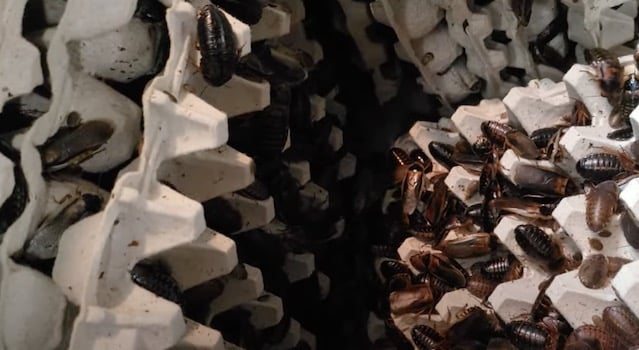
In the wild, they hide amongst leaf litter, fallen branches, and decaying plants. But you don’t necessarily need to replicate these hiding spots in captivity unless you are experienced enough to create a bioactive enclosure. Most people simply use recycled egg crates and small cardboard boxes. Dubia roaches don’t really care about how their breeding enclosure looks as long as the conditions are ideal.
There are several types of substrate you can use for your breeding colony. Some popular choices include paper towels, coco fiber, peat moss, and aspen shavings. The substrate is important for keeping the humidity under control and making it easier to maintain the enclosure.
If you choose to use a paper towel, make sure to change it every week to prevent mold and bacteria growth. Other substrates, such as peat moss and aspen shavings, should be changed every 3-6 weeks. The substrate should be changed sooner if it becomes soiled or develops a bad odor.
Feeding Dubia Roaches
Dubia roaches aren’t fussy about their diet and eat almost anything remotely edible. However, a good diet is very important if you want to sustain a healthy breeding colony. They are primarily frugivores and prefer various fruits, grains, and vegetables. They also don’t mind eating decaying meat and plants in the wild.
Your breeding colony should always have access to fresh fruits and vegetables, such as apples, bananas, mangoes, carrots, and strawberries. They readily accept corn, tomatoes, and certain herbs as well, although these don’t have to be fed often. If you have any leftover fruits and veggies from cooking (especially apple and banana peels), you can give them to your dubia roaches instead of throwing them away.
Fresh foods spoil quickly, so they must be removed and replaced at least once a day. You can also offer “roach chow” in addition to fresh foods. Roach chow can either be DIYed or purchased pre-made from certain online retailers. It essentially contains various dry, nutritious ingredients such as oats, ground corn, and chicken feed. It lasts longer than fresh foods and works well as a staple food source.
The Importance of Gut-Loading
Any dubia roaches you feed to your bearded dragon should be gut-loaded at least 6 hours prior. Gut-loading increases the insect’s nutritional value, and it’s done for the bearded dragon’s benefit and not the feeders. If your roaches are already being fed a balanced diet, you can use a commercial gut-loading diet instead. It’s also a good idea to dust the dubia roaches with a calcium and vitamin D3 supplement to prevent metabolic bone disease, which is caused by a deficiency in these nutrients.
Dubia Roach Breeding Process
Dubia roaches have an interesting yet complex reproductive cycle. Unlike most roach species, dubia roaches don’t lay eggs. They are ovoviviparous, meaning they create their young inside tube-like egg sacks called ootheca. Females incubate ootheca internally for about 60 to 70 days. The female will expel the ootheca when the nymphs (newly born roaches) are ready to hatch. The nymphs start hatching immediately, but the entire hatching process can take several hours.
It’s not easy to spot nymphs because they are very tiny and white. However, they become darker as their exoskeletons become dry. The mother usually stays close to her newly hatched young for around a week to ensure they survive. It generally takes about 120 days for nymphs to become adults.
It takes most females between 2-4 weeks before they are ready to mate again because they need time to prepare for the next reproductive cycle. However, she might not breed again if the conditions aren’t right. That’s why it’s important to house them in an appropriate setup, feed them a healthy diet, and maintain an ideal temperature and humidity range.
The easiest way to tell male and female dubia roaches apart is by their size and wings. Females are slighter, larger, and rounder than males and have wings that only cover part of their abdomen. The males are slimmer and have long wings that extend past their abdomen.
Managing the Dubia Roach Colony
Managing your breeding colony takes a bit of work, but it’s worth it, considering that you will have a constant supply of feeders for your bearded dragon. Cleaning and maintaining the enclosure usually takes the most work, but it’s important to prevent mold and bacteria buildup.
A clean environment encourages breeding and keeps your colony healthy. Mold and bacteria growth can make the enclosure smell bad and contaminate food and water. They can also be lethal to colonies, especially if it’s the types that cause respiratory issues.
The enclosure should be spot cleaned almost daily, which involves removing uneaten food, and any bits of soiled substrate. All of the substrate should be replaced during a deep clean, but how often you do this depends on the type of substrate and how quickly it becomes dirty. During a deep cleaning, soiled hideouts (like those egg cartons or boxes) should be replaced with new ones.
Unless you have multiple reptiles to feed, you don’t want your breeding colony to overpopulate. This is also a problem if you do not have enough supplies, food, and space to house a very large colony. You can keep their population under control by separating the breeding adults from the nymph and placing them into different enclosures. If you want to stop the breeding process entirely, you can separate the males and females and only house a few of them together when you want them to breed again.
Common Issues When Breeding Dubia Roaches
Incorrect Temperature and Humidity
Incorrect temperatures can make them stressed and reduce their lifespan. Dubia roaches usually stop breeding when the temperature drops below 68°F (20°C) or above 90°F to 95°F (32°C to 35°C). Very low temperatures slow down their metabolism, so they will eat less and be less active. This isn’t good for breeding, so make sure that the temperature stays between 85°F to 90°F (30°C to 32°C) by using an external heat source and a thermostat.
Furthermore, excessive humidity and damp conditions can promote harmful mold growth, which isn’t good for their respiratory systems. Additionally, low levels of humidity below 50% can cause molting issues, which can sometimes be fatal.
Dubia Roach Parasites
It’s unlikely that commercial dubia roaches will have parasites, but they can still develop them if their enclosure isn’t maintained properly. Intestinal worms and mites are the most common parasites that infect dubia roaches. Dubia roaches can develop parasites from contaminated food, substrate, and water. It’s also possible for parasites to be transferred from other infected feeders or colonies. Parasites aren’t only harmful for your bearded dragon to ingest, but they can be fatal to your breeding colony as well.
Allergies to Dubia Roaches
According to studies, between 17% and 45% of people in the United States are allergic to roaches. There is a growing concern within the reptile community that prolonged exposure to dubia roaches puts you at risk of developing allergies. If you plan to breed dubia roaches, you should first speak to your healthcare provider and discuss proper safety precautions to reduce your risk of an allergy. Always wear gloves when handling your dubia roaches, and keep them in a well-ventilated room to limit your exposure.
Conclusion
And that’s how you can successfully breed tasty dubia roaches for your bearded dragon.
As we already discussed, dubia roaches are nutritious, high in protein, and low in fat, so they can be offered as a staple protein source. They are a quiet and odorless alternative to crickets, and it’s fairly easy to establish a thriving breeding colony. However, they need specific temperature, humidity, and dietary requirements to breed successfully. You can keep them healthy by regularly maintaining their enclosure and taking different measures to prevent overcrowding.