
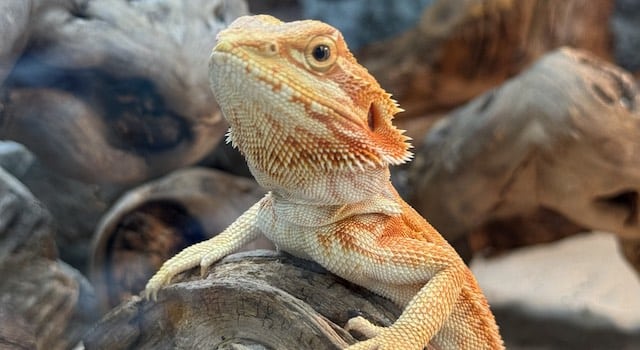
Bearded dragon enrichment is about more than keeping your beardie entertained. It’s about giving them the opportunity to express the behaviors they evolved to perform: hunting, digging, climbing, basking, and exploring. A dragon in a sterile tank with nothing to do is not thriving — it’s surviving. The difference shows up in their activity levels, their appetite, and their overall health over time.
The good news is that the most powerful enrichment for a bearded dragon usually costs nothing. It starts with the enclosure setup itself.
Why Enrichment Matters
In the Australian outback, a bearded dragon’s day is anything but sedentary. They bask in the early morning sun, then spend the warmer part of the day hunting insects, foraging for plant matter, patrolling their territory, climbing on elevated perches to survey their surroundings, and digging to thermoregulate. Every one of those behaviors serves a biological function.
In captivity, those instincts don’t switch off just because the enclosure is small and food arrives in a bowl. A dragon denied the opportunity to express natural behaviors will often become lethargic and lose appetite — not because it’s sick, but because it has nothing to do. Enrichment solves this. It’s not a luxury add-on; it’s part of what makes the difference between a dragon that exists and one that genuinely thrives.
The Enclosure as Enrichment
The single most impactful thing you can do for your dragon’s enrichment is get the enclosure right. This starts with the substrate.
Deep, Diggable Substrate
Natural substrate — desert sand, a topsoil-sand mix, or a full bioactive setup — deep enough for actual digging is fundamental enrichment. Bearded dragons dig to thermoregulate, to feel secure, to lay eggs, and because it’s what they’re built to do. Their claws are designed for it. An enclosure with at least 4 to 8 inches (10–20 cm) of substrate — sloping deeper toward the back — gives them something tiles and carpet never can.
Climbing Structures
Wild bearded dragons are semi-arboreal — they’re regularly found basking on fence posts, tree stumps, and rock outcrops. Elevated basking platforms, sturdy branches, slate ledges at different heights, and climbing rocks all provide opportunities for the height-seeking behavior that’s natural to them. A dragon that can choose between ground level and an elevated perch has more control over its environment — and that control matters for wellbeing.
Hides and Sheltered Areas
A dragon that can hide when it wants to is a less stressed dragon. Provide at least one hide at the warm end and one at the cool end. Natural-looking hides — flat rocks leaned against a wall, cork bark, ceramic hides — work better than bright plastic caves. The goal is something that feels secure, not something that looks cute.
Varied Basking Options
Multiple basking surfaces at different heights and textures give your dragon choices. A flat rock basking spot, a branch at half height, and a cool shade spot are three different microclimates — and giving your dragon the ability to move between them actively enriches their day.
Foraging and Hunting
One of the most overlooked forms of enrichment is how you deliver food. Placing insects in a smooth bowl — from which they can’t escape — removes the hunting behavior entirely. Let insects loose in the enclosure and let your dragon stalk and hunt them. Use the natural substrate to your advantage; insects moving through loose substrate trigger the same prey-detection behaviors wild dragons use every day.
When hunting live insects, allow your dragon to catch them naturally rather than offering them on tongs. Tong-feeding removes the physical and cognitive element of the hunt. It’s fine for a sick or elderly dragon that can’t chase prey — but for a healthy animal, the chase is part of the point.
Outdoor Time
Supervised outdoor time on warm, sunny days is one of the most powerful enrichment experiences you can give a bearded dragon. Real sunlight provides unfiltered UVB at intensities no indoor setup fully replicates. The sensory experience — real soil underfoot, wind, natural smells, the sounds and movement of the outdoors — is categorically different from anything inside.
Outdoor time requires supervision. Predators, escape risks, toxic plants, and cool temperatures are all real hazards. A secure outdoor pen with shade and access to real sunlight — even just an hour on a warm afternoon — is tremendous enrichment for a dragon that spends the rest of its time inside. Never leave a dragon unsupervised outdoors.
Handling and Exploration
Calm, regular handling gives your dragon new sensory experiences — different textures, temperatures, smells, and environments. Let them explore a safe room, climb over different surfaces, or sit near a window and watch the world outside. Not all dragons enjoy being out of their enclosure, so read the individual animal — a dragon that’s constantly trying to return to the enclosure is telling you it doesn’t want more out time, not that it needs more training.
Enrichment to Avoid
A few common “enrichment” suggestions are worth skipping:
Blankets and soft toys. Bearded dragons are ectotherms. A blanket doesn’t warm them — it insulates them from external heat. Soft toys offer no meaningful sensory stimulation. Neither belongs in the enrichment toolkit.
Mirrors. Bearded dragons will often react to their own reflection with black-bearding and arm-waving — a stress response to a perceived territorial intruder. This isn’t enriching. It’s stressful.
Forcing interactions. Enrichment should be something your dragon chooses to engage with, not something imposed on them. An animal that’s hiding, black-bearding, or trying to escape is telling you it wants less interaction, not more.
Frequently Asked Questions
Do bearded dragons need enrichment?
Yes — and most captive bearded dragons don’t get enough of it. In the wild, they spend their days hunting, foraging, climbing, and digging. In a sterile tank with nothing to do, those instincts don’t disappear — they go unmet. Enrichment is part of proper welfare, not an optional add-on.
What is the best enrichment for a bearded dragon?
The best enrichment triggers natural behavior: deep diggable substrate, climbing structures, live insect hunting, scatter-feeding foraged salads, and supervised outdoor time in warm weather. These cost little or nothing and make a real difference to a dragon’s daily experience.
Can I let my bearded dragon outside?
Yes — supervised outdoor time on warm, sunny days above 85°F (29°C) is excellent enrichment. Real sunlight, real ground, real smells. Never leave them unattended outdoors, and make sure any plants in the area are non-toxic.
Are blankets and soft toys good enrichment for bearded dragons?
No. Blankets insulate bearded dragons from the heat they need, and soft toys offer no real sensory value to a lizard. Effective enrichment triggers natural instincts — hunting, climbing, digging, foraging — not the same comfort behaviors that work for mammals.
Building a More Natural Life for Your Beardie
The most enriching thing you can do is build an enclosure that mirrors the Australian outback as closely as possible. Our bearded dragon enclosure ideas guide has plenty of inspiration, and the substrate guide is a great next step if you’re still on tiles or carpet. Give your dragon something to do — and watch what it does with the opportunity.
If this guide helped, subscribe to our newsletter for new care guides, husbandry tips, and the occasional myth-bust delivered straight to your inbox. And if you’d like to chat with other bearded dragon owners, come and join our Facebook group. It’s the friendliest place we know to ask questions, share enclosure photos, and learn from a community that genuinely cares about these incredible animals.
The information in this guide is general in nature and is not a substitute for advice from a qualified reptile veterinarian.
Sign Up for Our Newsletter