
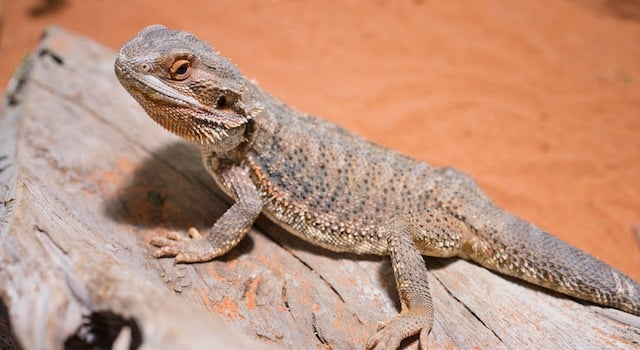
Bearded dragon substrate is one of the most debated topics in reptile keeping — and also one of the most misunderstood. The short answer is this: with correct husbandry, natural sand, soil, and bioactive setups are not just safe — they’re the best substrates you can use. They replicate what bearded dragons actually evolved to live on across the Australian outback.
The fear around sand and loose substrate usually comes from outdated advice and the myth that it causes impaction. It doesn’t — not when your dragon is healthy and your enclosure is set up correctly. Tiles, reptile carpet, and vinyl liners solve a problem that doesn’t really exist, while creating a different one: they deny your dragon the ability to dig, burrow, and behave naturally.
This guide covers the best substrate choices, what to avoid, and how to maintain it properly. If you’re setting up a bearded dragon enclosure for the first time, substrate is one of the first decisions you’ll make — and this is everything you need to get it right.
What Wild Bearded Dragons Actually Live On
Dr. Jonathan Howard (BeardieVet) conducted field studies in the Australian outback measuring the actual substrate wild bearded dragons live on. The breakdown? Approximately 95.9% sand, 2.3% clay, 1.5% silt, and 0.3% gravel. That’s a fine, loose, sandy soil — exactly the kind of material that good desert sand blends and topsoil mixes replicate in captivity.
Wild bearded dragons don’t live on tiles. They don’t live on reptile carpet. They dig, burrow into the ground to regulate their temperature, lay eggs in deep soil, and forage across sandy terrain every day of their lives. Their claws are built for it. Their instincts are built for it. When we put them on a flat, hard surface in captivity, we’re denying them the chance to express those behaviors — and that has real welfare consequences.
The Best Substrates for Bearded Dragons
For a healthy dragon in a correctly set up enclosure, any of the following substrates are excellent choices.
Desert Sand Blends
A purpose-made desert sand blend — the kind sold at most reptile stores — is one of the easiest natural substrates to work with. It’s similar in composition to wild outback substrate, it allows digging, and it holds burrow shapes reasonably well. Look for fine-grained, dust-free options. Children’s play sand (washed and dried) is a widely used, affordable alternative that works well.
Topsoil and Sand Mix
A 60/40 or 70/30 sand-to-topsoil mix is arguably the closest thing to genuine Australian outback substrate. It packs better than pure sand, holds burrow shapes excellently, and allows real digging depth. Make sure the topsoil is organic, unsterilized, and free from pesticides, fertilizers, and perlite. This mix is also the foundation of a bioactive setup.
Bioactive Setups
A bioactive enclosure takes the topsoil and sand mix further by adding a cleanup crew — isopods and springtails — that break down waste, control bacteria, and keep the substrate healthy. It’s more work to set up initially, but it dramatically reduces the maintenance afterward. Bioactive is the gold standard for naturalistic bearded dragon keeping, and the enrichment benefits for the dragon are significant. You can read more about this in our bearded dragon enclosure ideas guide.
Adding Hard Surfaces
Whichever loose substrate you choose, it’s worth adding some hard surfaces — flat rocks, slate tiles, or rough stone — in the basking area. These give your dragon somewhere to grip with its claws, naturally wear down nail tips, and provide contrast in texture. They’re also much easier to spot-clean than loose substrate.
Substrates to Avoid
Not all loose substrates are created equal. Some carry genuine risks — not because they’re loose, but because of what they’re made of.
- Kitty litter — any kind. Clumping litter is particularly dangerous if ingested.
- Crushed walnut shell — sharp edges and completely indigestible.
- Wood chips or wood shavings — wrong texture, wrong smell, zero resemblance to natural habitat.
- Calci-sand — forms solid clay-like lumps when wet; could do the same in a dragon’s gut.
- Gravel — too large, wrong texture, potential to cause genuine obstruction if swallowed.
- Coconut fiber — not a desert material; holds too much moisture and encourages fungal growth.
Tiles and reptile carpet aren’t dangerous in the way the above materials are — but they’re not natural, they don’t allow digging, and they work against your dragon’s instincts. If you’re using them because you’re worried about impaction, read the next section first.
What About Impaction?
Let’s be direct: impaction from natural sand or soil, in a dragon with correct husbandry, is not a realistic risk. A healthy bearded dragon with proper temperatures and UVB lighting has excellent gut motility. If it swallows a small amount of substrate while hunting — which happens in the wild constantly — it passes through without issue.
Impaction is a secondary problem. When it does occur, the real cause is almost always one of these: temperatures are too low, UVB is inadequate, the dragon has an underlying health issue, or the substrate used is one of the genuinely dangerous types listed above. Fix the husbandry first. The substrate is rarely the culprit — it’s a symptom of something else going wrong.
If you want to understand why impaction happens and how to prevent it, our bearded dragon impaction guide covers it in full detail.
Quarantine and New Dragons
There’s one important exception to everything above: new dragons, dragons recovering from illness or surgery, and dragons being treated for parasites should be on what’s called “hospital husbandry” until they have a clean bill of health.
That means paper towels or butcher’s paper as substrate, a food bowl, a water bowl, and a non-porous basking surface. Clean daily with a reptile-safe disinfectant. Get a vet check including a fecal test. Keep this going for roughly two months, or until all health issues are resolved. Once your dragon has a clean bill of health, transition to natural substrate.
How to Maintain Natural Substrate
Natural substrate does require some upkeep — but it’s not as involved as people often assume. Here’s a simple maintenance routine:
- Daily: Spot-clean any fecal matter and the surrounding area. Remove uneaten food.
- Every 6 weeks (roughly): Full substrate replacement. Remove everything, disinfect the enclosure, and replace with fresh substrate.
- Bioactive: Spot-clean as needed, but your cleanup crew handles much of the breakdown. Full substrate replacement is much less frequent — sometimes not for a year or more.
Make sure your substrate is deep enough for digging — at least 4 to 8 inches (10–20 cm) deep, sloping higher toward the back to let your dragon create a proper burrow. Many keepers use sand or soil but don’t give their dragon enough depth for the substrate to hold a burrow shape without hitting the bottom glass. Digging is not just an enrichment bonus; it’s a natural temperature regulation behavior. Let your dragon do what it’s built to do.
Getting the substrate right is one piece of the puzzle. For the full picture on temperatures and lighting — both of which matter far more to impaction risk than substrate type — check those guides next.
Frequently Asked Questions
What is the best substrate for a bearded dragon?
For a healthy dragon with correct husbandry, the best substrate choices are a desert sand blend, a topsoil and sand mix, or a fully bioactive setup. All allow natural digging behavior and closely replicate what wild bearded dragons live on in Australia. Tiles and reptile carpet are not recommended — there’s nothing like them in the wild, and they deny the dragon its natural instinct to dig.
Does sand cause impaction in bearded dragons?
No — not with correct husbandry. A dragon with proper temperatures, correct UVB lighting, and a varied diet will pass any incidentally swallowed sand with no issues. Impaction is a secondary problem, not a substrate problem. If it occurs, incorrect husbandry or an underlying health issue is almost always the root cause.
Can baby bearded dragons use sand substrate?
Yes — with the same caveat as adults: husbandry must be correct. There’s no separate substrate zone for hatchlings in the wild; they live on the same sand and soil as adults. Babies with incorrect temperatures or poor lighting are at greater risk regardless of substrate type.
What substrates should I never use for a bearded dragon?
Avoid kitty litter, crushed walnut shells, wood chips, wood shavings, calci-sand, gravel, and coconut fiber. These materials are either too abrasive, swell when wet, have sharp edges, or are completely indigestible. If consumed, these substrates carry a genuine impaction risk — unlike natural sand or soil with correct husbandry.
How deep should bearded dragon substrate be?
Deep enough that your dragon can actually dig — at least 4 to 8 inches (10–20 cm) deep, sloping higher toward the back to let your dragon create a proper burrow. Many keepers use sand or soil but don’t give enough depth for the substrate to hold a burrow shape without hitting the bottom glass. Digging is a natural behavior, not an optional one.
What substrate do wild bearded dragons live on?
Research by Dr. Jonathan Howard (BeardieVet) from field studies in the Australian outback found wild bearded dragon substrate to be approximately 95.9% sand, 2.3% clay, 1.5% silt, and 0.3% gravel — essentially a fine sandy soil. That’s what a good desert sand blend or topsoil mix replicates in captivity.
Ready to Build the Right Setup?
Choosing the right substrate is a great first step. If you want help putting the whole enclosure together, our bearded dragon tank setup guide covers everything from enclosure size and lighting to temperature gradients and décor. Getting it right from the start makes everything easier — and it gives your dragon the environment it was built for.
If this guide helped, subscribe to our newsletter for new care guides, husbandry tips, and the occasional myth-bust delivered straight to your inbox. And if you’d like to chat with other bearded dragon owners, come and join our Facebook group. It’s the friendliest place we know to ask questions, share enclosure photos, and learn from a community that genuinely cares about these incredible animals.
The information in this guide is general in nature and is not a substitute for advice from a qualified reptile veterinarian.
Sign Up for Our Newsletter