
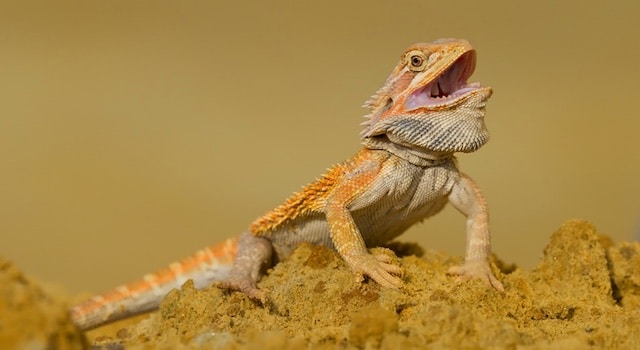
Humidity is one of the most misunderstood parts of bearded dragon care. You’ll read everywhere that you must keep the number between 20% and 40% or your dragon will get a respiratory infection — and while there’s truth in that, it badly oversimplifies what’s actually going on. The real story is this: it’s not the humidity number that matters most. It’s ventilation and airflow.
Bearded dragons evolved across the arid and semi-arid regions of the Australian outback. Their bodies are built for dry, well-ventilated air with strong daily temperature swings — and in the wild, humidity rises and dips constantly throughout the day and night. That’s completely normal. What these animals never experience in nature is warm, damp, stagnant air with nowhere to go. And that, far more than any number on a hygrometer, is what causes respiratory and fungal infections in captivity.
This guide walks you through what the right humidity actually looks like for a bearded dragon, why ventilation matters more than the reading itself, how to measure humidity properly, what to do when it drifts too high or too low, the truth about misting and humid hides, and the most common mistakes to avoid.
What’s the Right Humidity for a Bearded Dragon?
The commonly cited target range for a bearded dragon enclosure is 20% to 40%. Stay in that band with decent airflow, and you’ll never have a problem. But here’s the part that most care sheets get wrong: the number itself is far less important than whether the air in the enclosure is actually moving.
Consider two enclosures. The first sits at a “perfect” 35% humidity but is a sealed aquarium with no side ventilation and stagnant air. The second reads 80% — well above the supposed danger zone — but has excellent ventilation, with air flowing through constantly. Counterintuitively, the dragon in the second enclosure is at no risk, while the dragon in the first one can still develop problems over time. Why? Because respiratory and fungal infections are caused by warm, damp, stagnant air — not by a high reading on its own. When the air moves, it doesn’t sit against the dragon’s respiratory system and breed the bacteria and fungus that cause infection.
That’s why our advice is always to focus on ventilation, airflow, and tank design first, and treat the humidity number as a secondary check. Get the enclosure design right, and the number largely takes care of itself.
Brief natural fluctuations are completely normal, too. Just like in the wild — and just like in your own house — humidity rises and dips throughout the day, and tends to rise at night. A fresh salad raises it briefly while it evaporates. None of that is cause for concern. What you’re watching out for is the specific combination of persistently high humidity plus poor airflow, not normal day-to-day variation.
Why Humidity Levels Matter
Get humidity wrong in either direction, and your dragon’s health takes a hit.
Too High = Respiratory Infections
The biggest risk is respiratory infection (RI) — but, to repeat the central point, it’s high humidity combined with poor airflow and stagnant air that causes it, not a high reading on its own. When damp air sits still in a poorly ventilated enclosure, bacterial and fungal growth thrives, and the dragon’s respiratory system becomes vulnerable. Additional stress or illness can make a dragon more susceptible, too. RIs can be fatal if left untreated and always require veterinary attention. The signs to watch for include a gaping or open mouth, crackling or noisy breathing, mucus or liquid from the nose or mouth, difficulty breathing, a puffy throat, black bearding, lying flat, and not eating.
If your dragon shows a mix of these signs and your humidity has been high in a poorly ventilated tank, get to a reptile vet as soon as possible — they’ll likely need antibiotics. If you genuinely can’t reach a vet immediately (for example, at night with no emergency clinic open), raise the basking temperature to around 108-109°F (42-43°C) and sit your dragon under the basking lamp on a slight tilt with the head lower than the back end, which helps drain mucus. This is a stopgap only — get to a vet as soon as you can.
Too Low = Shedding and Hydration Issues
The flip side is less dramatic but still worth managing. Very low humidity can cause incomplete or “stuck” sheds — particularly around toes, the tail tip, and around the eyes. Persistent dehydration is also a risk if your dragon isn’t getting enough moisture from misted salads and gut-loaded insects. That said, healthy hydration usually comes from food, not from ambient humidity directly. Truly chronic low humidity is rare in most homes and rarely the primary cause of either issue.
How to Measure Humidity Accurately
Guessing doesn’t cut it. You need a hygrometer to know what’s actually happening in the enclosure. The right tool:
- Digital hygrometer — accurate to within a couple of percentage points, easy to read, and often combined with a digital thermometer in one unit. Many keepers run one or two combo thermometer/hygrometer units in the enclosure. Around $15-$25 USD each.
- Avoid stick-on analog dial gauges. They’re cheap, but commonly 10-20% off — wildly unreliable. Anything that important shouldn’t be measured with a guess-meter.
Place the hygrometer at substrate level somewhere in the middle of the enclosure — not directly above the water bowl (it’ll read artificially high) and not right up near the basking globe (it’ll read low and hot). Check readings at different times of day, since humidity naturally fluctuates with temperature and lighting.
If you want extra confidence, place a second hygrometer at the cool end of the enclosure as well. The two readings together give you a clearer picture than a single measurement.
Ventilation: The Thing That Actually Matters
If you take one thing from this guide, make it this: humidity by itself isn’t the killer. Stagnant air is. A well-ventilated enclosure handles high humidity without trouble, while a sealed enclosure with no airflow can cause problems even at a “safe” reading. Ventilation is not the other half of the equation — it’s the main event, and the humidity number is really just a clue about whether your airflow is doing its job.
Good ventilation looks like this:
- A vent low on the cool side for cool, dry air to enter
- A vent high on the hot side for warm, moist air to exit
- Together, these create natural convection — air moves through the enclosure constantly without any fans needed
- For larger or sealed enclosures, a small clip-on fan near the vents can help keep airflow active
This is exactly why we recommend front-opening enclosures with proper ventilation panels rather than sealed glass aquariums. Aquariums weren’t designed for reptiles, and the limited airflow they offer is a real factor in why so many “tank-kept” beardies develop respiratory issues over time. VCA Animal Hospitals’ housing guidance echoes the same point about adequate ventilation, and Arcadia Reptile’s habitat resources walk through ventilation placement alongside lighting.
When Humidity Is Too High
If your hygrometer is reading consistently above 40%, your first move is not to chase the number down — it’s to make sure the air is moving. A well-ventilated enclosure can sit higher than 40% without putting your dragon at risk. Start with airflow, and the rest follows:
- Improve ventilation first. Check that vents aren’t blocked by decor or substrate. Add additional ventilation if your enclosure has only one vent or none at all.
- Move the water bowl to the cool side. Evaporation from a bowl directly under a heat lamp dramatically raises humidity.
- Use a smaller water bowl. Bearded dragons rarely drink standing water, and a smaller surface area means less evaporation.
- Cut down on misting. If you’ve been heavily misting salads or the enclosure itself, scale back.
- Add a small clip-on fan near a vent for active airflow during humid weather.
- Use a sock filled with uncooked rice in the enclosure as a temporary humidity sink — the rice absorbs moisture and lowers the reading. Replace it when it stops being effective.
- Check your substrate. Wet or saturated substrate is a common culprit. If you’ve over-misted plants or had a water bowl spill, dry the substrate out properly.
If you’re already seeing respiratory symptoms in your dragon, head to a reptile vet straight away — the humidity adjustment is a fix for the underlying environment, but an active infection needs medical treatment.
When Humidity Is Too Low
If your hygrometer is reading consistently below about 20% and your dragon is having shedding issues or showing signs of dehydration, here’s what to try:
- Mist fresh salads a bit more heavily — this raises in-enclosure humidity briefly while it evaporates, and improves hydration via food
- A light mist in the enclosure first thing in the morning mimics natural morning dew. A few light sprays, not a soaking. Always avoid spraying the dragon directly.
- Add a small humid hide (covered in the next section) for shedding support without raising overall humidity
- Slightly larger water bowl on the cool side increases passive evaporation
- If running a bioactive setup, the planted substrate naturally holds a little more moisture than dry sand — this often keeps humidity in a healthy range without intervention
Don’t overcorrect. The goal is the 30-40% range, not a tropical setup. Bearded dragons handle dry conditions well as long as their food is properly hydrated and water is available.
Should You Mist Your Bearded Dragon?
Misting is a topic surrounded by extreme positions. Some keepers swear you should never mist a bearded dragon. Others mist daily. As usual, the truth sits between the two.
The reasonable middle ground:
- Misting fresh salads is almost always good. It raises hydration via food, briefly raises in-enclosure humidity, and mimics natural moisture sources. Do this daily.
- A light morning mist on the enclosure surfaces every now and then is fine, especially if humidity has been low. Think morning dew — a few sprays, not a downpour.
- Don’t spray the dragon directly. They can aspirate water, and it’s stressful.
- Don’t mist if your enclosure already has poor airflow, because you’re just adding water to a problem you haven’t solved.
- Never mist heavily right before lights off. Damp enclosure plus dropping temperatures is the worst combination for respiratory health.
The Humid Hide Question
A humid hide is a small enclosed hide containing damp sphagnum moss or paper towel, placed on the cool side of the enclosure. The dragon can choose to go inside when they want more moisture — typically during shedding — without affecting the overall enclosure humidity. Some reptile vets recommend humid hides as both shedding support and general enrichment.
The two views on humid hides for bearded dragons:
- The conservative view: bearded dragons evolved in dry conditions and don’t need a humid hide. As long as you provide misted salads and good husbandry, sheds happen naturally.
- The modern view: humid hides give the dragon a choice. Even in the wild, dragons find spots with slightly more moisture (under a rock, in a burrow, at the base of a plant). Providing that option in captivity is enrichment, not a problem — provided overall enclosure ventilation is good.
If you do add one, keep it small (just big enough for the dragon to enter), check the moss every few days to refresh or replace, and watch your overall humidity readings. A humid hide shouldn’t push your enclosure-wide reading much above 40%. If it does, your hide is too damp, or your enclosure ventilation needs work.
Seasonal and Environmental Factors
Where you live and what time of year it is both affect enclosure humidity significantly:
- Summer: warmer outdoor air often means higher indoor humidity. You may need more ventilation or a fan during peak summer months.
- Winter: indoor heating dries the air out significantly. Humidity sometimes drops below 20% during heating season. A small bump from misted salads usually compensates.
- Coastal or tropical climates: chronically high ambient humidity means you’ll need to lean hard on ventilation. Position the enclosure away from bathrooms, kitchens, or rooms with high steam.
- Dry inland climates: usually easy — humidity stays in the right range with minimal intervention.
- Bioactive enclosures: live plants and a slightly damp substrate base mean humidity naturally trends a touch higher. Ventilation becomes even more important.
Monitor over a couple of weeks once your enclosure is set up, in different weather conditions, before you fine-tune. A single high reading on a humid day doesn’t mean something’s wrong.
Common Humidity Mistakes
A few patterns we see often enough to call out:
- Relying on stick-on dial hygrometers. Cheap, common, and routinely 10-20% off. Get a digital unit.
- Treating humidity in isolation from ventilation. The two are inseparable. A perfectly humid enclosure with no airflow is still a problem.
- Keeping a giant water dish in the hot end. Massive evaporation, especially under a basking globe. Cool side, smaller bowl.
- Using an aquarium-style sealed tank. Limited ventilation makes humidity hard to control and respiratory infections more likely. Front-opening enclosures with proper vents are the modern standard.
- Misting the dragon directly. They can aspirate water, and it’s stressful. Mist the salad or the enclosure surfaces, not the animal.
- Heavy misting just before lights out. Damp enclosure plus dropping night temperatures is exactly the wrong combination.
- Panicking at brief humidity spikes. Brief is fine. Persistent without airflow is the problem.
- Ignoring shedding issues. Stuck shed on toes or tail tips often points to chronically low humidity. A humid hide or slightly more frequent misting usually resolves it.
Bringing It All Together
Bearded dragon humidity comes down to a simple recipe, and ventilation is the heart of it: design the enclosure for proper airflow first, aim to keep readings loosely in the 20-40% range, measure with a digital hygrometer, mist salads daily for food-based hydration, and never let the air go warm, damp, and stagnant. Remember the key principle — it’s stagnant air, not the number itself, that drives respiratory infections. Get the ventilation right, and the humidity stops being something to worry about.
If you’re ever in doubt — particularly if you see breathing changes, mouth gaping, mucus, or any other respiratory symptoms — get to a reptile-experienced vet promptly. RIs respond well to early treatment and are dangerous when left to progress.
Frequently Asked Questions
What humidity should a bearded dragon enclosure be?
Aim for 20-40% relative humidity, but treat that range as a secondary check. The real target is good ventilation — a vent low on the cool side and high on the hot side creating natural convection. A well-ventilated enclosure handles short humidity spikes without trouble; a sealed aquarium can cause respiratory problems even at a “perfect” 35% reading.
Is high humidity always bad for bearded dragons?
No — high humidity with good airflow is not the danger. Wild central bearded dragons live across parts of Australia that get very humid weather, and they do fine because they’re out in the open with air constantly moving past them. What causes respiratory and fungal infections in captivity is warm, damp, stagnant air sitting against the dragon’s airway. Fix the ventilation and the humidity number stops mattering on its own.
How do I measure bearded dragon humidity accurately?
Use a digital hygrometer — usually combined with a digital thermometer in a single unit for $15-$25 USD. Place it at substrate level in the middle of the enclosure, away from the water bowl and the basking globe. Avoid stick-on analog dials, which are commonly 10-20% off and unreliable.
Should I mist my bearded dragon or the enclosure?
Mist the salad daily — hydration comes from food, and well-watered greens mimic natural moisture sources far better than breathing damp air. A light morning spray on enclosure surfaces every now and then is also fine if humidity has been running low; think morning dew, not a soaking. What to avoid is heavy or frequent misting of the enclosure, especially later in the day, as that creates the stagnant damp conditions that cause respiratory issues. Never mist the dragon directly.
Do bearded dragons need a humid hide?
They don’t strictly need one permanently, but adding a small hide with damp moss during a shed gives them excellent naturalistic options to manage their own shedding — provided your overall tank ventilation is excellent. Think of it as enrichment rather than a necessity: the dragon gets to choose when to use it, just as they’d seek moisture under a rock or in a burrow in the wild. Keep the hide small, refresh the moss every few days, and make sure it’s not pushing your enclosure-wide humidity above 40%.
What humidity causes a bearded dragon respiratory infection?
There’s no specific number. RIs come from the combination of persistently high humidity plus poor airflow, not from a reading on its own. The signs to act on are gaping, mucus from the nose or mouth, crackling breathing, a puffy throat, lying flat, or refusing food. If you see those, get to a reptile-experienced vet promptly — antibiotics work well early and RIs can become dangerous fast.
Keep Reading
- Bearded Dragon Temperatures — the temperature half of the husbandry equation
- How to Set Up a Bearded Dragon Tank — including proper ventilation placement
- The Ultimate Bearded Dragon Lighting Guide — get the full lighting setup right alongside humidity
- Bearded Dragon Enclosure Ideas — naturalistic designs that build ventilation into the layout
- Bearded Dragon Health and Disease — recognizing the early signs of respiratory infection and other conditions
Join the My Pet Reptile community
If this guide helped you dial in your enclosure humidity, subscribe to our newsletter for new care guides, husbandry tips, and the occasional myth-bust delivered straight to your inbox. And come share your readings, enclosure photos, or questions in our Facebook group — it’s a friendly place to troubleshoot setup issues with other keepers who genuinely care about getting it right.
The information in this guide is general in nature and is not a substitute for advice from a qualified reptile veterinarian. If your bearded dragon is showing respiratory symptoms, please see a reptile-experienced vet promptly.
Sign Up for Our Newsletter