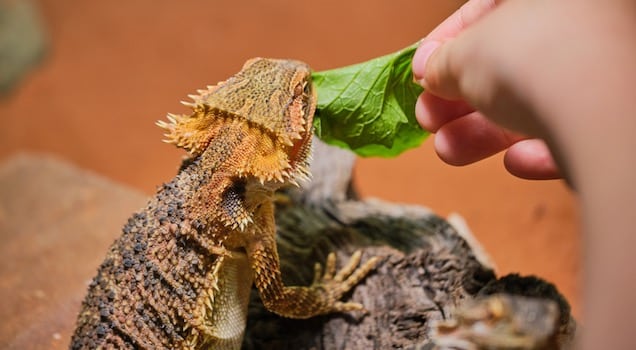
One of the first questions every new keeper asks is simple: what do bearded dragons eat? The short version is a varied mix of insects, leafy greens, vegetables, and edible flowers — foods that closely resemble what these animals would forage and hunt in the wild across the Australian outback.
The longer version is where it gets interesting, because a proper bearded dragon diet changes with age, leans heavily on variety, and depends on getting a few key things right — the ratio of plants to insects, the supplements you dust on, and the foods to avoid entirely. Feeding a beardie isn’t complicated once you understand the principles, but it’s an area where a lot of outdated and oversimplified advice still circulates.
This guide covers everything: the two halves of the diet, how it shifts as your dragon grows, the full list of safe greens and vegetables, which feeder insects to use, what to never feed, how to supplement correctly, and the feeding practices that keep your dragon healthy. It’s all built on our core philosophy — replicate the wild as closely as possible — and on the work of researchers like Dr Jonathan Howard (BeardieVet) who’ve studied what wild bearded dragons actually eat.
The Two Halves of a Bearded Dragon’s Diet
Bearded dragons are omnivores. Their diet has two components, and getting the balance right is the foundation of good nutrition:
- Plant matter — dark leafy greens, herbs, edible flowers, and a smaller amount of vegetables. This is the bulk of an adult’s diet.
- Live insects — a varied rotation of gut-loaded feeders. This is the bulk of a baby’s diet, tapering off with age.
Notice what’s not on that list: fruit, and processed or “complete” pellet diets. Neither resembles what a wild dragon eats, and we don’t recommend either. More on fruit further down.
How the Diet Changes With Age
The single biggest shift in a bearded dragon’s diet happens as they grow. Babies are building bodies fast and need protein; adults need far less and thrive on a plant-heavy diet. The general ratio:
| Life stage | Plant matter | Insects | Insect feeds |
|---|---|---|---|
| Baby (0-3 months) | ~20% | ~80% | 3x daily |
| Baby (3-6 months) | ~30% | ~70% | ~2x daily |
| Juvenile (6-9 months) | ~40-50% | ~50-60% | 1-2x daily |
| Juvenile (9-12 months) | increasing | decreasing | Transitioning to 1x daily |
| Adult (12+ months) | ~80% | ~20% | 2-3x per week |
By adulthood, you’re aiming for roughly 80% plant matter and 20% insects, and that ratio holds for the rest of their life. Fresh salad should be offered every day at every age — even for babies — and left in the enclosure for grazing. The insects are what reduce in frequency as the dragon matures.
One important note: offer salad before insects, and keep it available all day. Hungry adult dragons that fill up on bugs first often won’t bother with their greens.
Safe Leafy Greens, Herbs and Flowers
Dark leafy greens are the cornerstone of the diet and should make up the bulk of every salad. Herbs and edible flowers add variety, scent, and color that helps entice fussy eaters. The following are all safe to feed regularly:
- Staple leafy greens: dandelion leaves, watercress, arugula (rocket), endive, mustard greens, collard greens, turnip greens, mizuna, bok choy, choy sum, Chinese cabbage, Chinese broccoli, lamb’s lettuce, radicchio, kale, clover, mulberry leaves (leaf only, no stem or sap)
- Other greens and veg-greens: green beans, carrot tops, celery tops, cucumber, broccoli, zucchini, spaghetti squash, wheatgrass, cabbage, Brussels sprouts, artichoke
- Herbs: parsley, basil, thyme, oregano, mint (spearmint or peppermint), sage, cilantro (coriander), rosemary
- Edible flowers: dandelion flower heads, rose petals, hibiscus (petals/head only), nasturtium (flowers and leaves), pansy, petunia petals, dahlia petals, calendula petals
Leave the leaves large so your dragon can tear into them — it’s more natural and more engaging than finely chopped greens. And rotate constantly: a dragon eating arugula, watercress, and dandelion this week should get different greens next week. Variety isn’t just about avoiding fussiness; different greens deliver different minerals and vitamins.
Vegetables to Feed Occasionally
Some vegetables are fine in smaller amounts as part of the “other 20%” of the salad, but shouldn’t dominate. Grate or finely slice the harder ones so they’re easy to digest and can’t cause a blockage:
- Carrot (grated)
- Butternut pumpkin and other pumpkin (grated or finely cubed)
- Sweet potato, squash, rutabaga (swede)
- Bell pepper (capsicum), okra, fennel
- Prickly pear cactus pads
Think of these as supporting players, not the main event. The dark leafy greens always come first.
Feeder Insects
Live insects provide the protein side of the diet. Here’s where variety matters most — we’re not fans of the word “staples,” because relying on one or two feeders both narrows the nutrition and creates fussy dragons. Rotate through a range:
Good Everyday Feeders
- Roaches — a nice balance of minerals, slightly higher in fat than crickets. In the US and Europe, the standard is the Dubia roach (Blaptica dubia); in Australia, keepers typically use Woodies/wood roaches (Nauphoeta cinerea). They’re two entirely different species — not interchangeable names for the same insect — but both are excellent everyday feeders.
- Crickets — excellent gut-loaders (basically an empty vessel you can fill with nutritious greens)
- Black soldier fly larvae (BSFL) — high in calcium with a great calcium-to-phosphorus ratio; they don’t even need dusting. When they turn into flies, they make fun hunting enrichment
- Silkworms — high water content, gentle on the gut. Note: they can only eat mulberry leaves or mulberry mush, and they’re seasonal
- House fly pupae, grasshoppers, locusts — all good for adding variety
Treat-Only Feeders
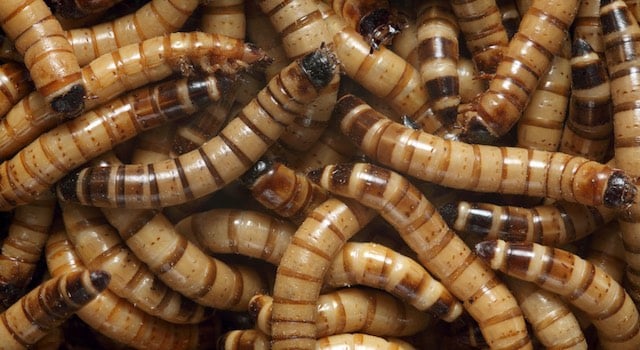
- Mealworms — best kept as an occasional treat. Their main drawbacks are a high chitin-to-meat ratio (making them harder to digest than softer-bodied feeders), a poor calcium-to-phosphorus ratio, and a tendency to get bearded dragons hooked — dragons that eat them regularly often start refusing better food. (And no, the myth that mealworms chew their way out of a dragon’s stomach isn’t true — stomach acid takes care of them.)
- Superworms — also high in fat, treat only, and best saved until your dragon is closer to adult size
A couple of feeders to skip: never buy bugs from a bait shop (only reptile shops or bug breeders, or breed your own), and avoid wild-caught insects unless you’re on pesticide-free acreage and understand the parasite risk. Dried or tinned insects have little to no nutritional value — feed live so the bugs can be gut-loaded.
Foods to Avoid and Never Feed
Some foods are genuinely dangerous, and others simply don’t belong in a healthy diet. Keep these off the menu:
Never Feed
- Avocado — toxic to bearded dragons
- Rhubarb — toxic
- Onions, spring onion, garlic, chives — all in the allium family, not safe
- Mushrooms
- Citrus fruits — too acidic
- Asparagus, corn
- African violet and impatiens (sometimes mistaken for safe flowers)
No Fruit — Not Even as a Treat
We take a firm line here: don’t feed fruit to your bearded dragon at all. Fruit is high in sugar, which causes dental disease and increases fungal culture in the gut, and it isn’t part of their natural wild diet. There’s nothing in fruit your dragon can’t get more safely from greens and insects. For the full reasoning and the science behind it, see our dedicated guide on whether bearded dragons can eat fruit.
Limit High-Oxalate Greens
A few greens — spinach and Swiss chard being the main ones — are high in oxalates, which bind calcium and make it unavailable to your dragon’s body. Because calcium is so critical to preventing metabolic bone disease, we recommend limiting or avoiding these greens rather than feeding them regularly. There are plenty of better leafy greens on the safe list, so there’s no need to rely on the high-oxalate ones. LafeberVet’s clinical reference covers the supplementation principles in vet-school depth.
Calcium and Multivitamin Supplements
Supplements correct a fundamental imbalance: most feeder insects have a calcium-to-phosphorus ratio of around 1:7-10, while bearded dragons need roughly 2:1 in favor of calcium. Dusting insects with calcium counteracts their high phosphorus. Greens, by contrast, have a naturally good ratio (often 4-20:1 in favor of calcium), which is part of why plant matter becomes more important as dragons mature.
What to Use
- Calcium: a fine, plain calcium carbonate powder made for reptiles, with no phosphorus and no vitamin D added. (A little magnesium or other minerals is fine.)
- Multivitamin: a reptile multivitamin, which may contain vitamin D.
An important modern update: with a quality T5 HO UVB tube, your dragon synthesizes its own vitamin D efficiently, so added dietary vitamin D is largely unnecessary — and too much can cause hypervitaminosis, which can be fatal. This is one more reason proper UVB lighting matters so much. (If your UVB isn’t up to standard, you’ll need to supplement vitamin D more — but the better fix is to sort out the lighting.)
Dusting Schedule by Age
- 0-3 months: calcium on the first bug feed, once daily every day; multivitamin once a week to every two weeks on one bug feed
- 3-6 months: calcium on the first bug feed, once daily; multivitamin once a week to every two weeks
- 6-9 months: calcium on one bug feed once a day; multivitamin once a week to every two weeks
- 9-12 months: calcium each day; multivitamin every two weeks
- 12+ months: calcium on each bug feed (bugs now 2-3x a week); multivitamin every two weeks — continue for life
Always dust lightly — don’t drown the bugs in powder — and only ever dust insects, never the salad. (BSFL are the exception; they’re already calcium-rich and don’t need dusting.) This advice reflects input from multiple reptile vets with access to the latest UVB testing.
Smart Feeding Practices
What you feed matters, but so does how you feed. A few practices that make a real difference:
- Gut-load your insects. What the bugs eat, your dragon eats. Feed your feeders the nutritious greens and weeds you’re not giving your dragon that week, so the variety stacks up. (Silkworms are the exception — mulberry only.)
- Let them hunt. Don’t feed with tongs or tweezers — drop bugs in (one at a time for crickets) and let your dragon chase. It’s natural behavior and good enrichment.
- Size matters. Never feed an insect whose body width is larger than the space between your dragon’s eyes, and grate hard vegetables. Oversized food is a leading cause of impaction.
- Mind the lighting and timing. Lights on for at least an hour before feeding, and don’t feed within a couple of hours of lights-out — dragons need heat and light to digest. Don’t remove them from the basking area straight after eating, either.
- Never leave live bugs unattended. Crickets and other feeders will bite and chew a dragon if left in the enclosure, especially overnight. Remove every uneaten bug, and never return them to the feeder container (it raises parasite risk) — throw them away.
- Don’t overfeed or power-feed. Overfeeding causes obesity, organ strain, rapid unhealthy growth, and a host of other problems. Aim for slow, steady growth in the first year, and consider charting your dragon’s weight and length.
Frequently Asked Questions
Can Bearded Dragons Eat Spinach?
We recommend limiting or avoiding it. Spinach is high in oxalates, which bind calcium and make it unavailable to your dragon — working against the calcium balance that prevents metabolic bone disease. With so many better leafy greens available, there’s no need to rely on spinach.
Can Bearded Dragons Eat Cucumber?
Yes, occasionally. Cucumber is safe but it’s mostly water with limited nutritional value, so it works as an occasional hydrating addition rather than a salad staple. Don’t let it crowd out the nutrient-dense dark leafy greens.
Can Bearded Dragons Eat Carrots?
Yes, occasionally and grated. Carrot is on the “occasional vegetable” list — fine in small amounts as part of the 20% “other” portion of the salad. Carrot tops (the leafy greens) are actually a safe everyday green and a great way to use the whole vegetable.
Can Bearded Dragons Eat Celery?
Celery tops (the leaves) are safe to feed. Like cucumber, celery is high in water and low in nutrition, so it’s an occasional addition rather than a core green.
Can Bearded Dragons Eat Kale?
Yes. Kale is a safe, nutritious leafy green that’s fine as part of your regular rotation. As always, variety is key — rotate it with other greens rather than feeding the same thing every day.
Bringing It All Together
So, what can bearded dragons eat? A varied, rotating diet of dark leafy greens, herbs, and edible flowers, supported by a smaller amount of vegetables and a varied rotation of gut-loaded insects — with the balance shifting from insect-heavy in babies to roughly 80% plant matter in adults. Dust insects lightly with plain calcium, supplement with a multivitamin on schedule, skip fruit and the dangerous foods entirely, and never stop prioritizing variety.
Get the diet right alongside proper lighting and temperatures, and you’ve covered the two biggest pillars of bearded dragon health. The rest is consistency.
Keep Reading
- Can Bearded Dragons Eat Fruit? — the full reasoning behind our no-fruit position
- The Ultimate Bearded Dragon Lighting Guide — why proper UVB means you barely need to supplement vitamin D
- Bearded Dragon Impaction — how food size and feeding practices affect digestion
- How to Set Up a Bearded Dragon Tank — the enclosure and lighting that make digestion possible
Join the My Pet Reptile community
If this guide helped you sort out your dragon’s diet, subscribe to our newsletter for evidence-based care guides, feeding tips, and the occasional myth-bust delivered straight to your inbox. And come share your dragon’s salad creations in our Facebook group — it’s a friendly community of keepers who base their advice on real research and love comparing feeding setups.
The information in this guide is general in nature and is not a substitute for advice from a qualified reptile veterinarian.